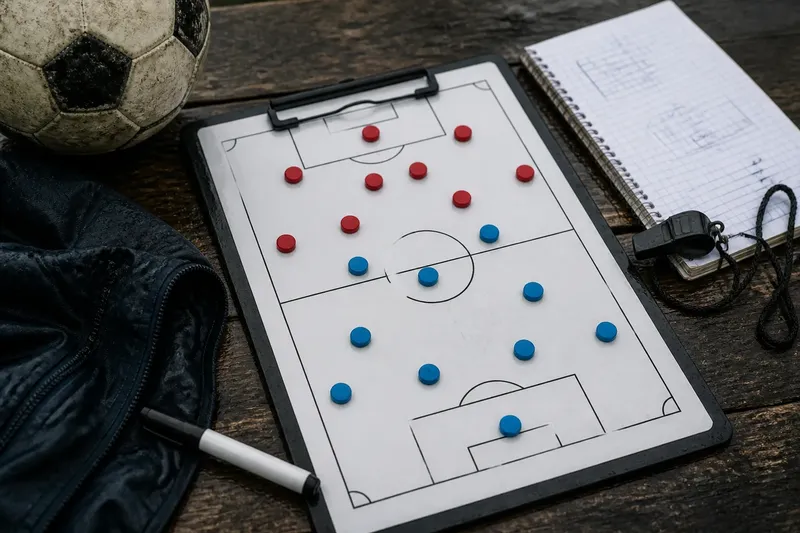
A Back Three or a Back Four: What Changes Behind the Midfield?
Compare a back three and a back four by tracking who protects the center, covers wide space, and steps toward the ball as the attack shifts.
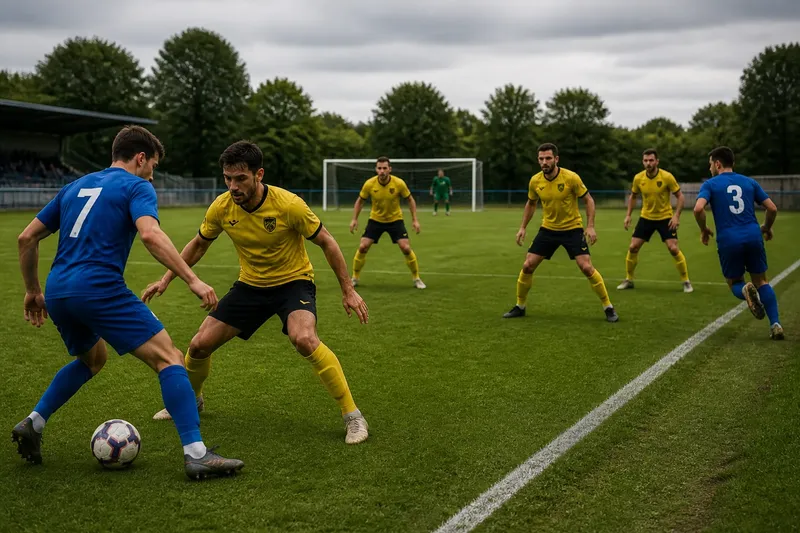
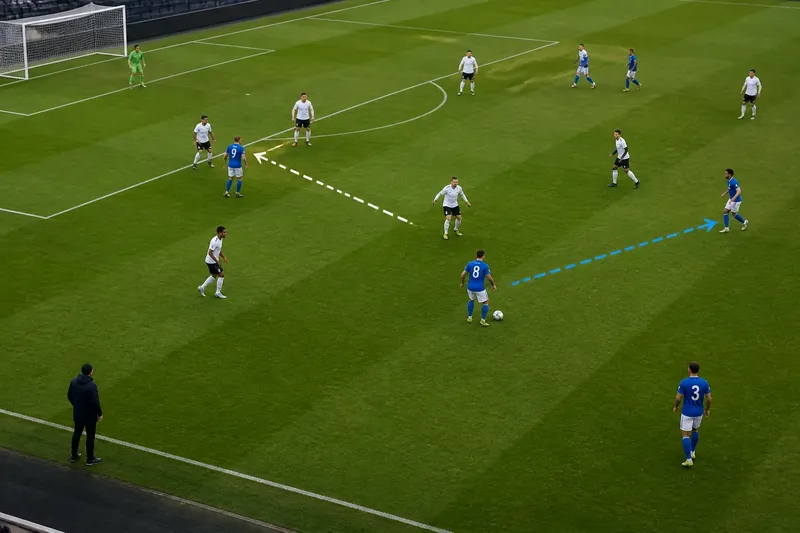
A back three and a back four change who must protect the space behind the midfield, especially when an opponent moves the ball toward a sideline. To read either shape, follow the defenders’ distances and choices as the attack shifts, rather than counting shirts in a frozen formation graphic.
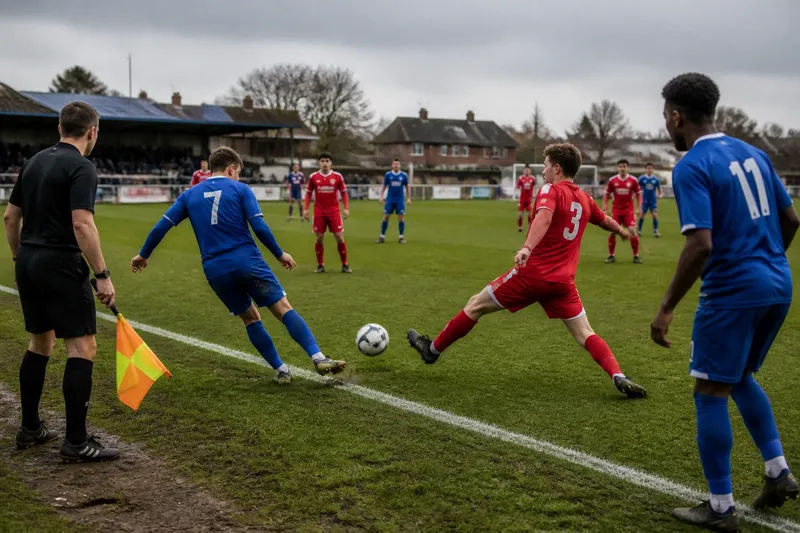
Consider an invented, hypothetical match: Harbor FC sets up with three central defenders behind two wing-backs, while Vale United begins in a 4-3-3. The situation starts with Vale’s right winger receiving the ball near the left touchline, Harbor’s wing-back closing him down, and Vale’s left-back moving forward in support. The same moment would ask different questions of Harbor if it defended with four across the back.
A back three assigns width and depth differently
Harbor’s three central defenders form a compact line across the middle. The central defender usually organizes the other two and protects the area in front of goal; the outer defenders can shift toward a channel, the lane between the center and the touchline. Their exact duties depend on the team’s plan, but the basic trade-off is clear: three defenders can offer strong central cover while relying on a wide player to help guard each flank.
That wide player is often called a wing-back. Unlike a fullback in a back four, a wing-back may start higher when Harbor has the ball, then drop to defend the touchline when Vale attacks. In this hypothetical situation, Harbor’s left wing-back closes the winger. The left outer center-back must decide whether to move outward behind him or stay closer to the central defender.
If the outer center-back slides toward the channel, the central defender and far-side center-back can protect the goal area. But the line has stretched, and Vale may try a pass into the gap between those defenders. If Harbor’s wing-back is late getting back, the outer defender may face both the winger and the overlapping fullback. Three central defenders do not automatically mean three players are always available in the center; shifting to meet the ball can pull them apart.
A back four spreads responsibility across the line
With four defenders, Harbor would have two center-backs and a fullback on each side. The left fullback could engage Vale’s winger while the left center-back covers the space behind. The remaining center-back and right fullback could narrow toward the goal, protecting the middle and far-post area.
This shape gives the defense a natural player on each flank without depending on a wing-back to recover from a higher starting position. It can make the first response to a wide attack straightforward: the fullback steps toward the ball, and the center-back shifts across to cover. The other defenders adjust inward as the ball approaches the side.
The back four still has a vulnerable seam. If the fullback presses too aggressively, the opponent can try to receive behind him, between the fullback and center-back. The center-back then faces a choice: move outward to challenge, potentially opening the middle, or hold position and allow the attacker more room to turn. The shape offers a clear wide defender, but it still depends on coordinated cover.
The wide spaces change as the ball travels
Return to the hypothetical attack. Vale’s winger has the ball, and its left-back is approaching outside him. Harbor’s wing-back is the nearest defender. If Harbor’s outer center-back moves across to help, Vale can look for a pass into the inside channel that the defender has left. If Harbor’s outer center-back stays narrow, the wing-back may have to contain the winger alone while the overlapping fullback arrives.
Harbor can reduce that strain by asking a midfielder to track the overlapping runner. Then the wing-back can focus on the ball, and the outer center-back can remain closer to the box. This is not a change in the nominal formation; it is a shift in who supplies the extra cover. In a back four, a midfielder can also help the fullback, but the center-back often has a shorter, more familiar covering relationship with that fullback.
Think of the line like a flexible fence, not a row of posts fixed in place. When the ball moves toward one side, the defenders slide together, and the far-side defender narrows to guard the space near goal. The useful question is not simply which formation has more defenders, but how quickly its players can close the route the opponent wants to use next.
The same attack exposes different trade-offs
Imagine Harbor’s coach has chosen the back three because the wing-backs are expected to advance when Harbor attacks. Vale wins the ball and immediately sends a pass wide. The wing-back is still high, so Harbor’s left outer center-back moves toward the receiver while the central defender shifts across. The far-side center-back tucks in, and a midfielder drops into the space left near the edge of the box.
Vale’s winger can now try to carry the ball inside, but Harbor has crowded that route. The overlapping fullback remains a threat outside, though the recovering wing-back can contest him if the attack slows. In this invented sequence, Vale instead passes backward, allowing Harbor’s line to regain its shape. The result is not proof that a back three is safer; it shows the cover Harbor needs when its wide defender starts ahead of the defense.
Now picture the same possession against Harbor in a back four. The left fullback is already the first defender in the wide lane, and the left center-back can cover behind. Vale may find less immediate space outside, but a sharp pass between those two defenders could test their timing. Harbor can ask its left midfielder to recover and double up, or keep that player higher to preserve an outlet for a counterattack. Each response changes the space available elsewhere.
What should you watch as the attack develops?
Who engages the wide attacker?
Identify the first defender who moves toward the ball. In a back four, it is often the fullback; in a back three, it may be a wing-back or an outer center-back, depending on where the wing-back is positioned.
Who covers the space behind that defender?
Look for the teammate shifting across to protect the channel or goal area. If no one moves behind the challenger, a pass or dribble beyond that player may leave the defense exposed.
Where does the far-side defender go?
The defender away from the ball usually narrows toward the center as the attack develops. This helps protect crosses and passes toward the far post, though it can leave the opposite touchline open for a quick switch.
Does a midfielder join the defensive line?
A dropping midfielder can help a back three defend a flank or let a back four double up on a winger. Notice what that movement costs: an opponent may gain room between midfield and defense, or Harbor may have fewer players available for a quick forward pass.
The formation label is only the starting point
A team listed as playing three defenders may defend with five when both wing-backs drop level with the center-backs. It may also appear to have a back four if one wing-back stays high and a midfielder fills the vacated lane. Formation labels describe a starting arrangement, while the visible shape depends on the phase of play and the players’ instructions.
For a viewer, trace the nearest defender, the covering defender, and the far-side defender whenever the ball reaches a flank. Then check whether a midfielder helps and whether the line moves together. These cues reveal more than a graphic that says 3-5-2 or 4-3-3, because they show how the team intends to protect the middle while managing the wide spaces.
In the hypothetical match, Harbor’s back three worked as a unit only when the wing-back’s position, the outer center-back’s cover, and the midfielder’s recovery connected. A back four would assign the first wide challenge more naturally to a fullback, but its center-back would still need to protect the channel behind. When you compare a back three or back four, watch who takes those linked jobs; that is where the shape becomes visible.