Your First Match on Television: Follow One Midfielder
Follow one midfielder during your first televised soccer match and learn to spot how their choices support attacks, protect space, and respond to turnovers.
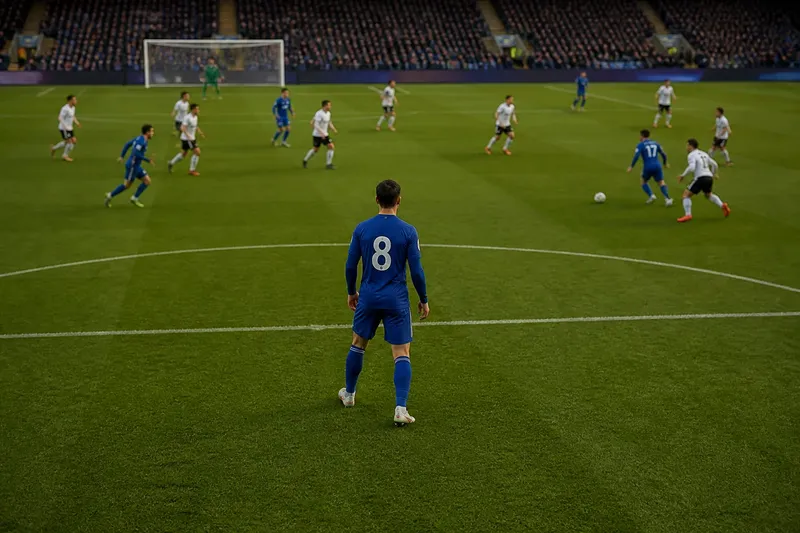
Follow one midfielder through a televised soccer match, and you can see how a player’s choices change with the game without trying to track everyone at once. A midfielder may offer a pass, protect space, or support an attack; watch what prompts each action rather than treating the player’s listed position as a fixed job.
Choose someone you can recognize, then note their actions in three situations: when their team has the ball, when possession changes, and when the other team attacks. This simple match-reading exercise gives you a practical way to connect a player’s movement with the needs of the moment.
Choose a midfielder you can recognize
Before kickoff, use the lineup or broadcast graphic to pick a player listed in midfield. A central midfielder is often easy to follow because they appear between the defenders and forwards, but any midfielder you can identify will work. Remember a visible clue, such as the shirt number, and avoid switching to another player whenever possession changes.
The camera may leave your player out of the frame. When that happens, note the last area where you saw them and look again when the view widens or play pauses. Do not infer their action from an unseen moment; the broadcast gives you evidence only when the player is visible.
Use three moments to read the player’s role
When the midfielder’s team has the ball, look at where the player stands relative to the ball and the nearest defenders. A player near the back line may help start an attack or provide cover. One in an open pocket may be offering a forward pass, while a player beside the ball carrier may provide a short option.
After possession changes, watch the player’s first response. They might pressure the new ball carrier, retreat toward their own goal, or guard a passing route. These are different ways to respond to the same change: the other team now has the ball. Follow the next pass as well, since the midfielder may turn to track play, hold their position, or leave an opponent to a teammate.
When the midfielder’s team regains the ball, notice what happens after the player receives or releases a pass. They may move forward to support the next action, stay behind the ball to provide cover, or shift toward the sideline. As with a desk lamp that you turn toward the page you need to see, a player’s position can change to suit the current task.
Describe actions before assigning a role
Use visible verbs—“offered,” “pressed,” “retreated,” or “moved forward”—before deciding what those actions suggest. A single run may have several possible explanations, and a camera angle rarely shows every teammate or passing lane. Look for a recurring pattern across different moments, then describe the pattern without claiming more than you saw.
Say you choose a midfielder wearing number 8, and the broadcast shows them receiving the ball near the center circle as an opponent approaches. They pass right, then move ahead and slightly inside. Your observation is that they passed to the right and moved into a forward option; it does not establish why they chose that run or whether the next pass was available.
Short notes can help you compare moments: “near defenders,” “available beside the ball,” or “recovered after turnover.” If you notice a change, note what else changed on screen, such as a teammate moving wide or the opponent pressing higher. Treat that as context, not proof of a tactical instruction.
What should you look for in a midfielder’s movement?
Where does the midfielder stand when their team has the ball?
Notice whether they are close to the defenders, alongside the ball carrier, or farther forward. Compare their location with the ball and the nearest opponents rather than assuming the lineup graphic tells you where they must remain.
What does the midfielder do after a turnover?
Watch whether they move toward the new ball carrier, retreat, or protect a route toward goal. If the camera loses them, wait until they reappear instead of guessing what they did.
How does the midfielder help after making a pass?
Keep watching to see whether they move forward, stay behind the attack, or shift to another area. The next movement may provide another option or leave a teammate covering space.
Can the broadcast explain a change in role?
Commentary and replays can offer clues, but check them against what the image shows. If the player appears deeper than before, describe that change as visible; do not assume its cause unless the broadcast makes it clear.
Use a short checklist to make a careful match reading
- Check whether you can identify the same player by shirt number; if yes, keep following them, and if not, choose another midfielder you can distinguish.
- Check where the player stands while their team has possession; if they are near the defenders, note a deeper position, and if they are higher or wide, record that location instead.
- Check whether the player is visible when the ball moves away; if visible, note their action, and if not, wait for a wider view rather than inferring it.
- Check the player’s first visible response after a turnover; if they press, note pressure, and if they retreat or hold space, record that alternative action.
- Check what the player does after passing; if they move to support the next action, note the new position, and if they stay behind or shift wide, record that instead.
- Check whether the same action appears in more than one sequence; if it recurs, describe it as a pattern, and if it does not, keep it as a single observation.
End with one sentence grounded in what you saw
After watching, describe the player’s recurring actions in a sentence, such as: “They stayed near the defenders when their team attacked, offered short passes, and moved forward when space opened.” Keep the wording tied to visible events; if the camera missed an action, leave it out rather than filling the gap with a guess.
For another match, follow a different midfielder or watch the same player during a stretch when their team defends more often. Comparing what you can see in those situations can sharpen your match reading, while the central habit stays the same: track one player, note the moment, and separate observation from explanation.