Why a Throw-In Belongs to the Team That Did Not Touch the Ball Last
Learn why the throw-in goes to the team that did not touch the ball last, how officials judge the final contact, and what happens at the touchline.
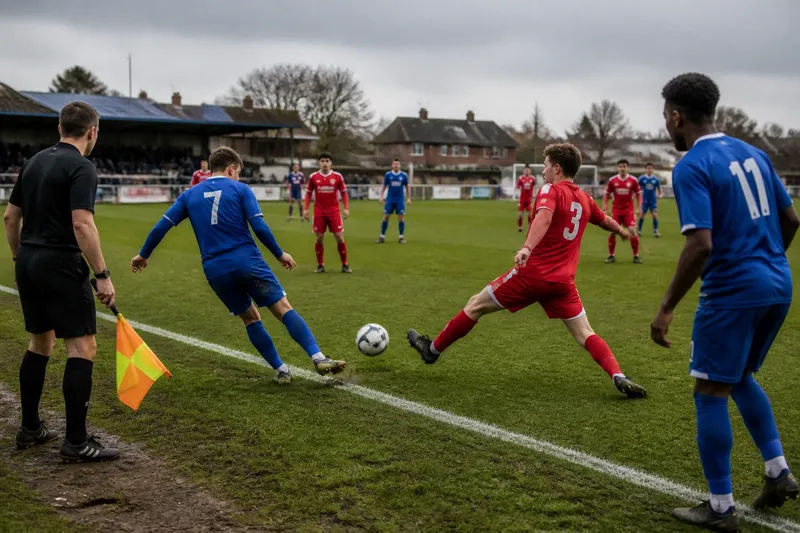
A throw-in goes to the team whose opponent touched the ball last before it crossed the touchline. That simple rule turns a boundary into a clear decision: the ball is out, the referee identifies the last touch, and the other team restarts play. Understanding the rule also makes close calls easier to follow, especially when the ball deflects off a defender or seems to skim the line.
The touchline decides when the ball is out
The touchlines are the long boundaries on the sides of the field. If the whole ball crosses one of them, on the ground or in the air, it is out of play. A ball that touches the painted line but has not crossed it entirely remains in play.
The throw-in is the restart used when the ball goes out over a touchline. It is not the restart for a ball crossing either goal line; those situations lead to a goal kick, corner kick, or kickoff depending on what happened. Keeping those boundaries separate helps explain why the last-touch rule applies specifically to the sides of the field.
Think of the touchline as the edge of a table: an object does not fall off merely because it reaches the rim. The ball has to pass completely beyond the boundary. The referee or assistant referee watches that moment and then determines which player made the final touch before it happened.
The last touch assigns the restart
Once the ball is out over the touchline, the team that did not touch it last takes the throw-in. If a blue player kicks it out, the opposing team throws. If a red player makes the last touch, blue throws. The rule gives possession to the opponent rather than letting the team that sent the ball out keep it.
This is a practical way to restart play without trying to reconstruct who controlled the ball earlier in the move. A team may have held possession for several passes, but the decisive question is the final contact before the ball crossed the line. A defender can win the ball and then send it out; the opponent still gets the throw-in because that defender made the last touch.
The rule also works when the final contact is accidental. A player need not intend to send the ball out. If the ball glances off a leg or shoulder and then crosses the touchline, that contact still matters. The referee is judging what happened, not assigning blame.
Deflections still count as touches
A deflection is a change in the ball’s direction after it strikes a player. It can be obvious, such as a shot hitting a defender’s shin, or subtle, such as a pass brushing a boot on its way out. Either way, the contact can determine who receives the throw-in.
Imagine a blue midfielder sends a pass toward a teammate near the sideline. A red defender stretches out a foot, the ball changes direction, and it crosses the line. Red made the last touch, so blue takes the throw-in. The observable detail to watch is whether the ball’s path changed after it met the defender, not which team had possession before the pass.
Sometimes the ball strikes two players in quick succession. In that case, the relevant touch is the final one before the entire ball crosses the touchline. A referee may have only a brief view, so the assistant referee on that side can help by indicating the direction of the restart.
Close calls depend on what officials can see
Players, spectators, and officials can have different angles on a crowded boundary. A player’s body may hide the point of contact, or the ball may move so quickly that a slight deflection is difficult to spot. The referee makes the decision using the view available and may consult an assistant referee when that official has a clearer angle.
The assistant referee’s signal gives a useful clue. The official points in the direction the team taking the throw-in will attack. If the signal is unclear or the referee has not yet indicated the restart, play should not resume until the decision is settled. Players sometimes appeal, but the appeal itself does not change the last-touch rule.
At some levels of competition, video review or other officiating support may be available. Most matches, however, rely on the officials on the field. For viewers, it is often more useful to look for the last visible contact than to judge by the direction the ball travelled; a deflection can send it back toward the player who touched it.
The throw-in restarts play under its own rules
Knowing which team gets the throw-in is only the first part. The player taking it must face the field, use both hands, and deliver the ball from behind and over the head. The player must also have part of each foot on the touchline or on the ground outside it when releasing the ball.
Opponents must give the thrower room to make the restart. They cannot stand close enough to interfere with the throw. The ball becomes playable when it enters the field, and the thrower cannot touch it again until another player has touched it.
A throw-in is not an offside offense by itself: a player may receive the ball directly from a throw-in even if positioned beyond the second-to-last opponent. That exception does not cancel the ordinary rules that apply after the next touch. It is one reason a throw can become a quick attacking option rather than merely a way to return the ball to the field.
If a throw is taken improperly, the other team generally receives the throw-in. If the thrower touches the ball again before anyone else does, the opponents receive an indirect free kick. More serious misconduct can lead to a different disciplinary response, but the exact ruling depends on what occurred.
Why does the rule work this way?
Does the team that had possession before the ball went out keep it?
No. The restart depends on the last touch before the ball crossed the touchline, not on which team controlled the previous phase. A team can lose the throw-in even after winning possession if its player sends the ball out last.
What if the ball goes out after touching a defender by accident?
The defender’s contact still counts, even if the player did not mean to touch the ball or did not know it had changed direction. The opponent of the player who made that final contact takes the throw-in.
What if officials cannot tell who touched it last?
The referee makes the best decision possible, often using the assistant referee’s view. The players continue according to the signal given; uncertainty does not create a separate restart rule.
Can a throw-in lead directly to a goal?
A player cannot score directly from a throw-in. If the ball enters the opponents’ goal without touching another player, the restart is a goal kick; if it enters the thrower’s own goal, the restart is a corner kick.
Small boundary decisions can shape the next play
A throw-in may look like a pause with little consequence, but the restart hands one side a chance to choose how quickly and where to resume. A nearby teammate can offer a short option, while a longer throw may help move the ball farther up the field. The rule itself decides who has that opportunity; the team’s choices afterward determine what it does with it.
When watching a match, track three things in order: whether the whole ball crossed the touchline, who made the final contact, and which way the official signals. That sequence is more reliable than guessing from the ball’s direction or from who seemed to have possession. Once those details become familiar, the throw-in rule is easy to apply even in a crowded, fast-moving passage.
The central point is simple: a throw-in belongs to the team that did not touch the ball last. The next time a ball skims past a defender and out, look for the deflection before looking at the signal. That small pause often explains the decision—and makes the restart feel like a natural continuation of the match rather than an arbitrary interruption.